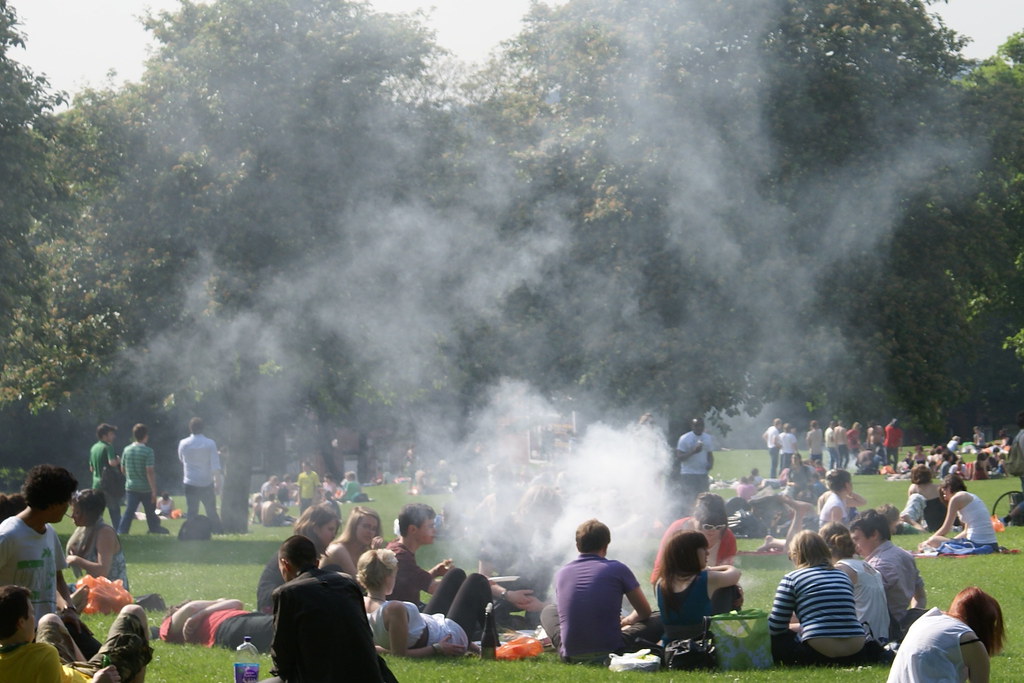
Justice is blind

Every single complaint that has been made to the council’s Scrutiny Board about the barbeque proposal has been rejected by the Lib Dem, Conservative and BNP councillors who sit on the board. Why is this?

Scrutiny Board chair Councillor Ralph Pryke has described the opponents of the barbeque scheme as “vocal”. His Lib Dem colleague Sue Bentley used similar words a year ago when she described residents who wanted Woodhouse Moor to be included in the DPPO proposed for Hanover and Woodhouse Squares as a “vociferous group”. If those who oppose the Lib Dems are characterised by them is this way, is it equitable that they and their allies should be in control of the boards that scrutinise the workings of the council?

John Illingworth said at the most recent meeting of the Scrutiny Board, “Nemo iudex in sua causa” – No one should be the judge of his own case. And yet this is what happens every time a Scrutiny Board hears a complaint from the community about the barbeque proposal. It’s time for the overseeing of the workings of the council to be taken away from the Scrutiny Board and handed over to an independent body.

(photo courtesy of RaeA)

What’s that helicopter costing us ?

If you’re an aviation enthusiast, you don’t have to travel to the airport to indulge your passion. All that’s necessary is to spend some time in Hyde Park and Woodhouse. For as well as lying under the flight path for Yeadon Airport, there’s a very good chance you’ll get to see the police helicopter – no matter what time of the day or night. And not only will you get to see the helicopter, you’ll also get the chance to hear it. In fact, you’re far more likely to hear it than you are to see it. Anyone who’s had it hover over their home for prolonged periods in the early hours of the morning will testify to that.

I wonder if anyone at West Yorkshire Police has ever weighed the cost of such aircraft against their benefits i.e has any cost benefit analysis been carried out to determine whether we’re getting value for money. One of the costs taken into account by cost benefit analysis is the “opportunity cost”. In the case of a police helicopter, the opportunity cost might be the number of policemen you could have instead of the helicopter. To work this out, all you need to know is the annual cost of running the helicopter, and a policeman’s salary. You then divide the running cost by the salary figure to determine how many bobbies on the beat the helicopter is costing us. According to West Yorkshire Police, the helicopter they use is an MD902 Explorer, and it’s in the air annually for 1,400 hours. According to consultants Conklin & de Dekker one of these helicopters has a variable operating cost per hour of $919 (£576). That means the helicopter has an annual variable operating cost of £806,400. To arrive at the helicopter’s total cost, you’d add on fixed costs such as the salary of the three man crew. This could be around £90,000 assuming the helicopter is manned by three constables earning £30,000, but it’s likely to be much more. So if the helicopter’s annual operating cost is £900,000, that would mean that instead of the helicopter, we could have 30 experienced police constables earning £30,000 per year, 39 new recruits earning £23,000 per year, or 56 PCSO recruits earning £16,000 per year.

In a letter to the Yorkshire Evening Post published earlier this year, Lib Dem councillor Martin Hamilton said that banning barbeques would divert the police away from other priorities. If spending just short of £1 million every year to keep a helicopter in the air is a police priority, then some people might say it’s time their priorities were re-evaluated.

References

West Yorkshire Police helicopter operating details
Conklin & de Dekker helicopter variable operating costs
Police pay scales

(Photo courtesy of Ulleskelf)

Councillors fear knock on effect on other parks

At this morning’s Scrutiny Board meeting, an application was heard from councillors John Illingworth and Linda Rhodes-Clayton for a reconsideration of the Executive Board decision to proceed with a barbeque area on Woodhouse Moor. During the course of the meeting, Councillor Mick Lyons asked, “If this is a trial, is it going to happen all over?”

This produced the following response from the councillor with responsibility for Parks and Countryside :

John Procter (Con) Mick Lyons is right. A few years ago disposable barbeques weren’t available. They’re an emerging phenomenon – cheap and easy.  Parks were to cater for people who didn’t have gardens. Young people in the flats that have been built in the city centre want to go and have a barbeque. Other areas with city centre parks also have problems with barbeques – we’re at the start of something. When large numbers of our constituents are demanding something, we’ve got to listen. How did we think we could stop this ?

As a result of Councillor Procter’s statement, Labour councillors expressed concern for the city’s other parks :

Brian Selby (Lab) John Procter says “this is an emerging issue.” Looking at the flats that have gone up in Roundhay, there should be a trial at Roundhay Park, and at Temple Newsam. This seems to be happening because students enjoy it. Is this why Woodhouse Moor has been allowed to go ? Are we saying it’s too difficult with so many students ? Isn’t this the law of taking the line of least resistance ?

Tom Murray (Lab) It’s worrying that John Procter said that this is an emerging problem which could affect all our parks. So our policy at this stage should be that we will enforce our current byelaws. I’ve heard from residents about the trial that they would like. It embraces all the things that John Procter’s trial does. We’re talking about education, signage, and education. We could market it as “Parks for picnics.” Looking at this picture, I don’t see any criminals. Enforcement would be easy. The message would be “We have parks for picnics, not parks for barbeques”.


Unofficial minutes of the Scrutiny Board meeting 16.9.09


(Photo courtesy of Simon Grubb)

It’s official – barbecuing on the Moor isn’t Green !

At a meeting earlier today of the full council, the leader of the Green Party, Councillor David Blackburn made the following statement with regard to the council’s proposal to establish a dedicated barbeque area on Woodhouse Moor :

“I cannot agree with this scheme. Parks are not for having barbeques and it should be stopped.”

Councillor Blackburn and his colleagues have an excellent track record on environmental issues. In 2007, they left the ruling Lib Dem/Conservative coalition over their opposition to the council’s proposal to build an incinerator to dispose of the city’s rubbish. Their courageous stance on the incinerator proposal helped to persuade the council to abandon its plans and to choose a waste recycling system instead. It’s to be hoped that their clearly expressed opposition to the barbeque scheme will also be heeded.

The lowest ebb is the turn of the tide

A few weeks ago, the Executive Board went ahead and approved the Lib Dem scheme to establish barbeque areas on Woodhouse Moor. Their decision was not a surprise.  At every preceding forum where the issue has been discussed, Lib Dem and Conservative councillors have voted to a man in favour of the scheme. There was no reason to suppose that the Executive Board would  be the exception. Even so, their decision was a blow to local people.  A further blow came this week with the suppression by Lib Dem councillors of key messages that local people had sent to the council’s area committee protesting against the barbeque proposal.

But now, just as it seemed that the voice of protest had been silenced, fresh voices of dissent have begun to be raised in other parts of the city. Councillors in other wards who are free to speak their own minds are speaking out against the barbeque scheme, recognising that the attack on Woodhouse Moor, is also an attack on every park on the city.

Reflecting on all of this, reminds me of the closing lines of Longfellow’s poem “Loss and Gain” :

Defeat may be victory in disguise;
The lowest ebb is the turn of the tide.


Photo courtesy of mr * p

BNP support for Lib Dem barbeque plan

Earlier today, BNP councillor Christopher Beverley voted with Lib Dem and Conservative councillors to reject an application for a review of the Executive Board’s decision to proceed with the barbeque scheme. The application had been made by Councillor John Illingworth (Labour, Kirkstall) and Councillor Linda Rhodes-Clayton (Independent, Hyde Park and Woodhouse) who argued that the council’s decision to proceed with the scheme failed to take into account the needs of disabled park users, especially those with breathing disorders. They said that the decision would make the park a no-go area for people with respiratory problems. Councillors heard from COPD sufferer Kathleen Mason how cigarette smoke from a passer-by on the street can badly interfere with her breathing. Kathleen explained that she had acquired her problem as a result of smoking, and passive smoking, and that as a result, if the barbeque scheme goes ahead, she will not not visit Woodhouse Moor again, and neither will she allow her grandchildren to go there. Councillors were shown photographs showing extensive smoke pollution from barbeques on the Moor. Following a discussion, the application was rejected by six votes to five with Lib Dem, Conservative and BNP councillors voting to reject the application, and Labour councillors voting to approve it.


(photo courtesy of mia)

Tony Green on the Executive Board decision to allow barbeque areas on the Moor

I attended the Executive Board meeting and enjoyed it enormously: Councillor Procter (Conservative) patronising the public and losing votes every time he opened his mouth; Councillor Golton (Lib Dem) sharing with us his touching family-reminiscences and concluding sagely that it is ‘a generational issue’: we are privileged to be represented by intellects like that: the torch of John Stuart Mill still burns bright (I wonder how many Lib Dem councillors have read On Liberty: it’s awfully good); poor Councillor Monaghan (Lib Dem) squirming to tow the party line while not alienating his voters: a treat to listen to (how he’s got himself tied up with this farce I can’t imagine; he ought to find a way of extricating himself.) Finally, seeing the vote go through on the nod, so that we all knew that the talk meant nothing, and it was all only done for the entertainment of the public. I recommend it to anybody. And it’s free. Except it isn’t. We pay the bill, in advance, and during, and retrospectively.